

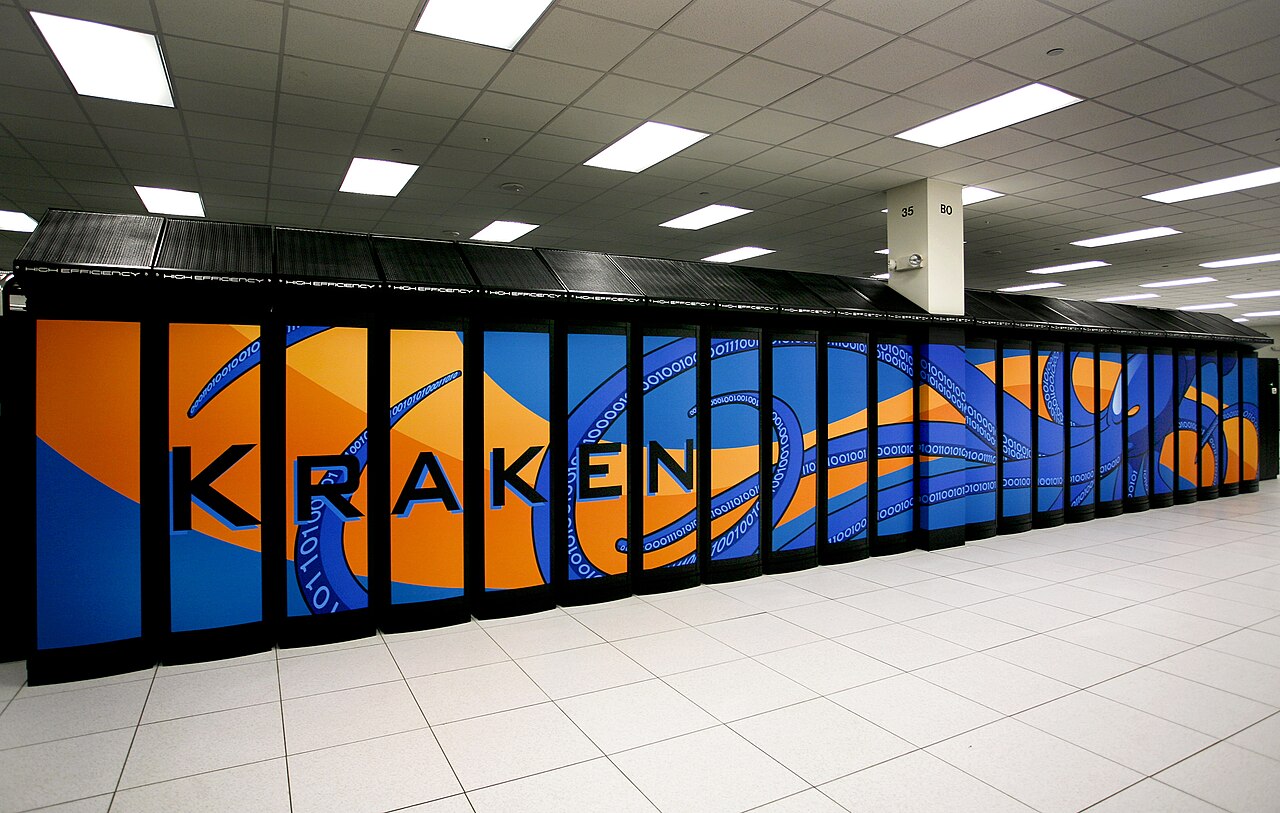
Europe’s first exascale supercomputer has been turned on one of computing’s hardest problems: simulating a quantum computer too large to check any other way. Researchers using JUPITER, the exascale system at Juelich in Germany, working with NVIDIA technology, have run the largest comprehensive fault-tolerant quantum computing simulation yet achieved, modelling a full 104 qubits.
Why Simulate a Quantum Computer at All?
It sounds paradoxical: using a classical supercomputer to imitate a quantum one. But simulation is how quantum computing grows up. Before fault-tolerant quantum machines exist at scale, researchers need to know whether their error-correction designs actually work, and the only place to test a 104-qubit fault-tolerant system today is inside a classical machine powerful enough to track its behaviour.
The numbers explain the difficulty. A quantum system’s state grows exponentially with each added qubit, which is why simulations historically stalled at a few dozen qubits for full, exact modelling. Reaching 104 qubits for a comprehensive fault-tolerant simulation means the team was not taking the usual shortcuts; they were using the methods described by Forschungszentrum Juelich, the research centre that hosts JUPITER, to push exact simulation into territory previously considered unreachable.
JUPITER’s Moment
JUPITER was built as Europe’s exascale flagship, capable of more than a quintillion calculations per second, and justified largely on artificial intelligence and climate-scale workloads. This result advertises a different talent: the machine as an instrument for designing its own eventual successors. There is a satisfying symmetry in the world’s fastest classical computers spending their cycles working out how quantum computers should be built.
The NVIDIA Connection
The simulation was carried out by researchers using NVIDIA technology, and the collaboration reflects where the industry is heading. Quantum computing’s near future is hybrid: classical supercomputers handling error correction, calibration and simulation around quantum processors that remain small and fragile. The companies and centres that master that partnership will shape the field more than any single qubit record.
What Fault Tolerance Actually Means
Fault tolerance is the threshold quantum computing must cross to become useful. Today’s quantum machines make errors constantly; their qubits are disturbed by heat, vibration and stray electromagnetic noise. Error correction wraps many physical qubits into one logical qubit that can detect and repair those errors as they occur, and fault-tolerant designs promise that the repair process itself does not introduce more errors than it fixes.
Simulating such a system at 104 qubits lets researchers test whether correction schemes hold together at realistic scale, where failures correlate and compound in ways small simulations never reveal. A scheme that gleams at 20 qubits can quietly fall apart at 100. Finding that out in simulation, rather than in hardware built over years, is the entire point. More coverage of European computing is available at magazinewrites.com.
Europe’s Computing Sovereignty Play
JUPITER also carries political weight. Exascale machines exist in the United States and China, and Europe’s absence from that tier was treated in Brussels as a strategic gap. A flagship that produces headline results in quantum simulation, AI and climate modelling is evidence the investment bought more than hardware; it bought a seat at the table where the next computing era is being designed.
For European quantum startups and university groups, a domestic machine of this class changes practical life. Simulation time that once required pleading for allocations abroad is now available inside their own research ecosystem, at scales that let them test ideas their competitors must leave theoretical.
What This Does Not Mean
Perspective is required. A simulation of a 104-qubit fault-tolerant computer is not a 104-qubit fault-tolerant computer. No quantum advantage was demonstrated over JUPITER itself; quite the opposite, the classical machine did the work. The road to physical machines that sustain this scale of error-corrected operation remains long, and honest researchers are the first to say so.
But the milestone is real in the way that matters for engineering. Quantum computing’s bottleneck has shifted from imagining fault-tolerant systems to verifying them, and verification at this scale is now demonstrably possible. The designs that survive JUPITER’s scrutiny are the ones most likely to be built, and that makes this simulation a quiet landmark on the way to machines that will one day return the favour.
The Engineering Behind the Headline
Simulations of this kind are feats of memory management as much as raw speed. The state of a large quantum system cannot be stored naively; it must be distributed, compressed and choreographed across thousands of accelerator chips, with communication between them kept from devouring the gains. The Juelich team’s achievement therefore says as much about software as about the machine’s peak numbers: algorithms that organise an impossible amount of data into something a supercomputer can actually hold and evolve.
That software legacy may outlast the record itself. The libraries and techniques built to simulate fault-tolerant systems at this scale become infrastructure for every group that follows, lowering the cost of the next experiment and the one after that. Records in computing are usually broken within a few years; the tools built to break them tend to serve for a decade.
A Benchmark for the Whole Field
Other centres will now measure themselves against 104. American and Chinese exascale machines, and the quantum hardware groups whose designs these simulations exist to test, all have a new reference point for what classical verification can reach. That competitive pressure is healthy: fault-tolerant quantum computing advances fastest when its claims are checkable, and checkability at scale is precisely what JUPITER has just demonstrated to the field.
