

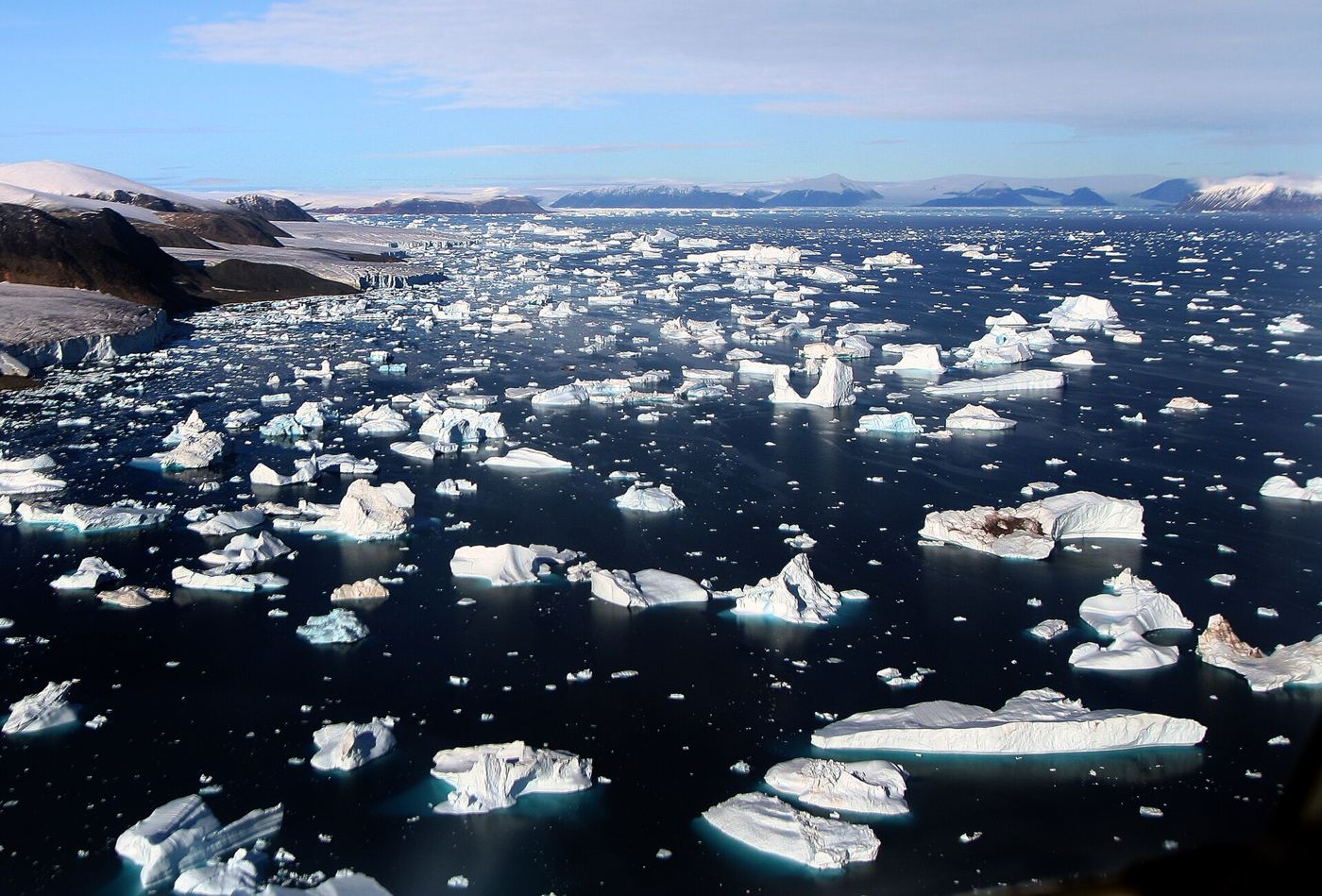
Repeated floods from lakes beside a Greenland glacier act as a natural brake on the ice, slowing its flow for years at a time, according to a study published in Nature Communications on 24 November 2026. Four decades of satellite data show that cyclical, high-magnitude outburst floods from ice-marginal lakes repeatedly reset the glacier’s flow to a slow state for several years. The finding matters because Greenland’s glaciers carry ice into the ocean, and how fast they slide controls how quickly the ice sheet loses mass and contributes to sea level rise. A natural process that keeps a glacier slow for years after each flood could change how scientists project the ice sheet’s future behaviour.
What the Evidence Shows
Lakes form where meltwater collects at the edge of a glacier, held back by ice or rock, and when the barrier fails the water escapes in a sudden outburst flood. Water at the base of a glacier normally acts as a lubricant, so the idea that a flood slows the ice sounds backwards, yet the satellite record shows the flow resetting to a slow state after each drainage and staying slow for years. Researchers interpret the repeated drainages as reorganising the water system beneath and around the glacier, reducing its ability to slide. The result shows that glacier motion depends on the full cycle of lake filling and draining, not just on how much meltwater is present, and models that ignore these cycles may misjudge ice flow. Reporting and analysis from sources such as National Science Foundation track the same developments, and specialists following the Greenland lake floods that slow a glacier say the direction is now consistent across independent lines of evidence.
The Wider Context
The wider context is a research landscape in which replication and open data now decide reputations. Findings connected to the Greenland lake floods that slow a glacier are being checked by independent groups with shared datasets, and the teams involved publish their methods in full so rivals can test every step. That discipline is slower than a headline cycle, but it is why results in this area increasingly survive first contact with scrutiny.
What Happens Next
What happens next in the story of the Greenland lake floods that slow a glacier will be decided by follow-up work already under way: larger samples, longer observation and instruments that have not yet come online. The researchers involved are unusually united on one point, that the current results justify the next investment of time and money. Readers will not have to wait long for the first tests of that claim. You can follow related developments in our coverage of science.
There is a practical lesson in all of this for readers deciding what to do today. Start with the verified facts, be wary of anyone promising certainty, and prefer reversible steps while the evidence is still developing. Circumstances differ by country, income and personal situation, so general guidance should always be weighed against your own context before you act on it in any significant or lasting way.
