

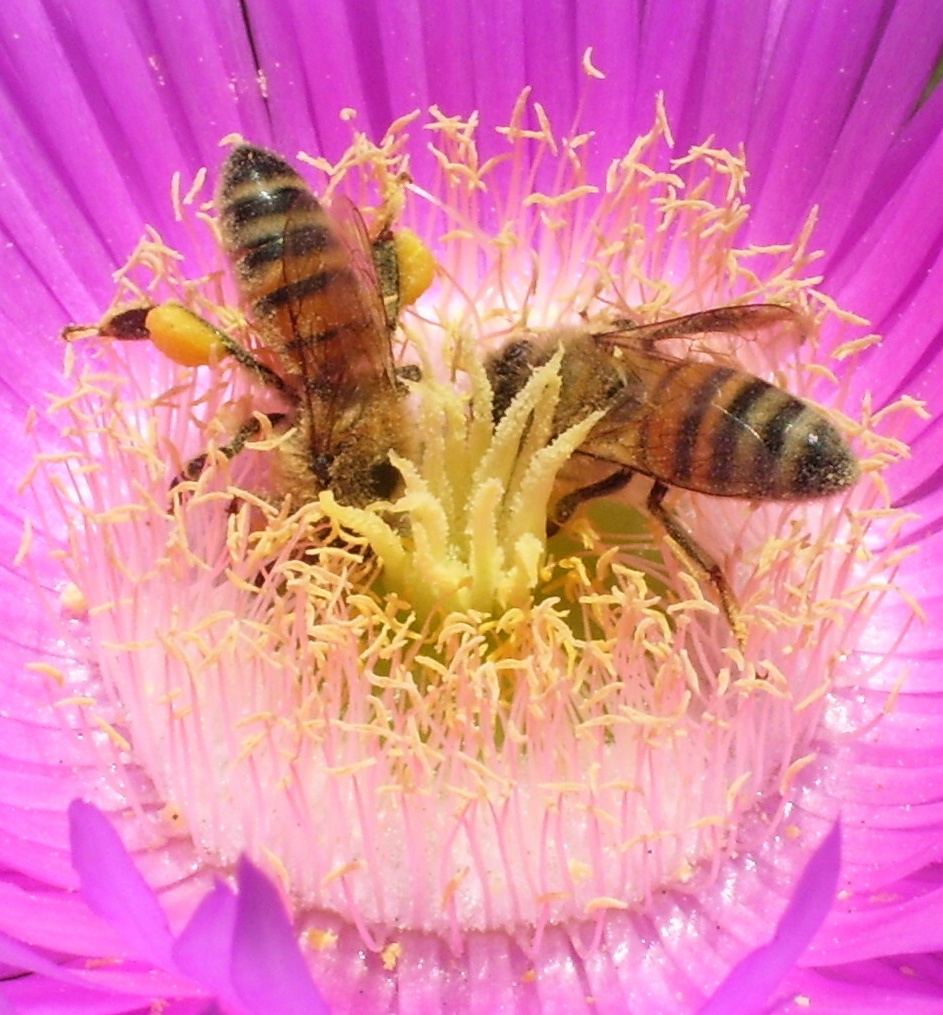
When people picture a bee, they usually picture the honeybee, a managed species kept in hives and moved between crops. Yet honeybees are only one species among thousands of wild bees, and ecologists are finding that the wild majority often want quite different things from a landscape. Wild bees vary enormously in size, tongue length, nesting habit and season of activity. A tiny solitary bee may fly only a few hundred metres in its life and depend on a handful of flower species that bloom in its short window, while honeybee colonies range widely and recruit thousands of workers to the richest patch available. Studies comparing flower visits show that some wild species specialise on particular plant families that honeybees largely ignore, which means a field edge planted to please honeybees may still leave specialists hungry. Nesting adds another divide, since most wild bees do not live in hives at all but in bare soil, hollow stems or beetle holes in dead wood. Protecting pollination in the round therefore means planning for this diversity rather than counting hives, a conclusion with direct consequences for how farms, gardens and road verges are planted and managed.
What the Evidence Shows
The distinction matters for crops as well as wildflowers, because research repeatedly shows that diverse wild pollinators can improve fruit set beyond what honeybees achieve alone. Different bees behave differently on a flower, fly in cooler or windier weather, and between them cover more of the season. That insurance value grows as climate shifts bloom times and weather patterns. Conservation advice is becoming more specific in response: leave patches of undisturbed bare ground for mining bees, keep dead stems standing through winter for cavity nesters, and plant sequences of flowers so something suitable blooms from early spring to late autumn. Monitoring programmes that train volunteers to identify and record wild bees are filling in distribution maps, revealing which species are retreating and where habitat work is succeeding. None of this diminishes the honeybee’s importance to agriculture. It reframes the goal. Healthy pollination is an ecological community service, and supporting the wild species that quietly provide much of it may be the most reliable investment farmers and gardeners can make. Reporting and analysis from sources such as National Science Foundation track the same developments, and specialists following wild bee flower preferences say the direction is now consistent across independent lines of evidence.
The Wider Context
The wider context is a research landscape in which replication and open data now decide reputations. Findings connected to wild bee flower preferences are being checked by independent groups with shared datasets, and the teams involved publish their methods in full so rivals can test every step. That discipline is slower than a headline cycle, but it is why results in this area increasingly survive first contact with scrutiny.
What Happens Next
What happens next in the story of wild bee flower preferences will be decided by follow-up work already under way: larger samples, longer observation and instruments that have not yet come online. The researchers involved are unusually united on one point, that the current results justify the next investment of time and money. Readers will not have to wait long for the first tests of that claim. You can follow related developments in our coverage of science.
There is a practical lesson in all of this for readers deciding what to do today. Start with the verified facts, be wary of anyone promising certainty, and prefer reversible steps while the evidence is still developing. Circumstances differ by country, income and personal situation, so general guidance should always be weighed against your own context before you act on it in any significant or lasting way.
